

Life at Lost Shore
Life at Lost Shore
Four sessions. 167 waves. One first barrel. Several small identity crises. A Norwegian field report from Lost Shore, where the waves are perfect, the advice is excellent, and your ego occasionally gets annihilated.
Photo: Kjetil Simonsen aka NorwaiiLongboards │ Text: SurfNorge
Had it not been for his ears, Morten’s grin would have done a full lap around his head.
He was in seat 18 on a plane to Edinburgh, forehead nearly suctioned to the window, scanning the Scottish landscape below like a man looking for lost treasure, a missing dog, or a very specific chlorinated wave pool.
“Is that it?”
“Or there?”
“Maybe that?”
Nope. It was none of those places.
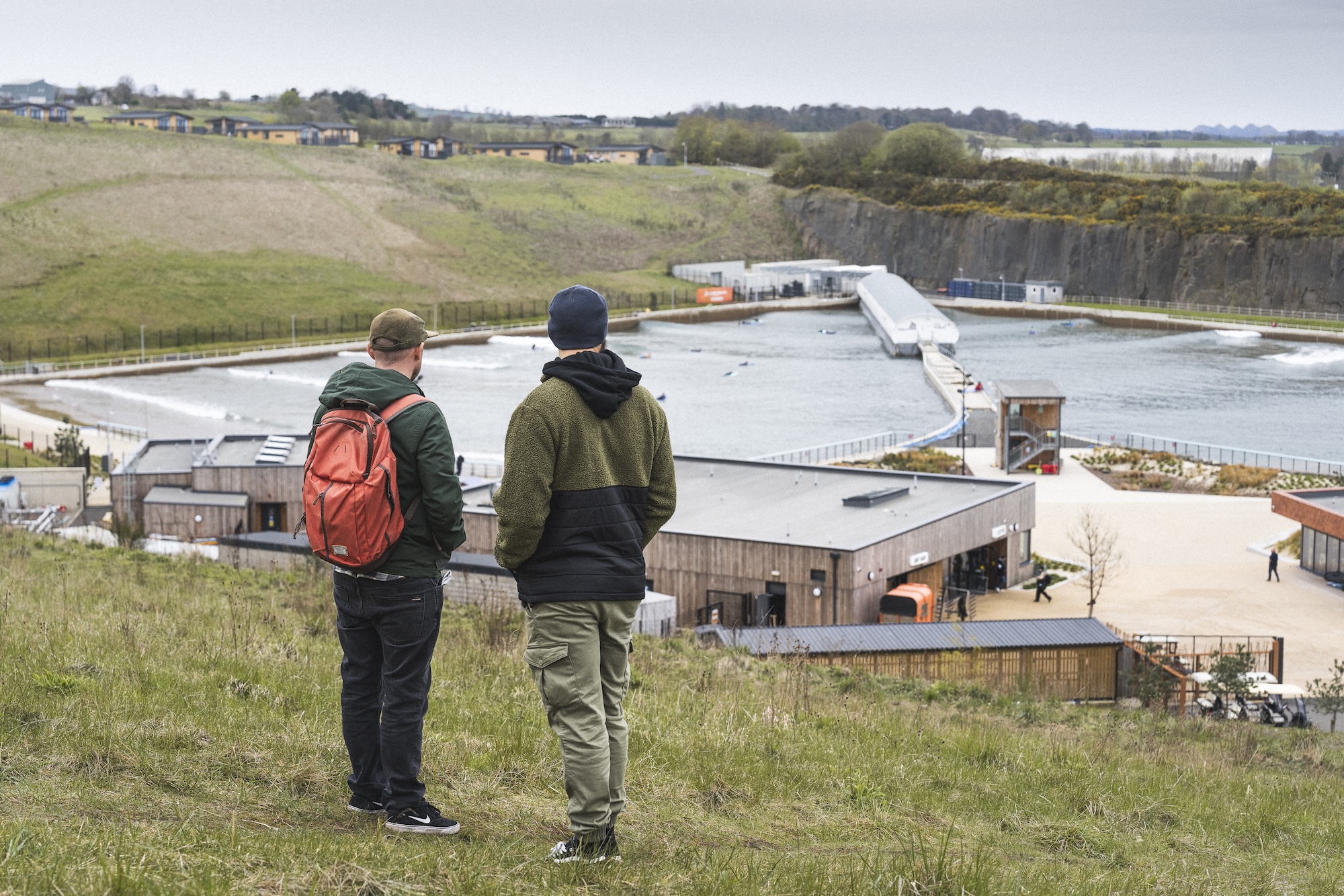
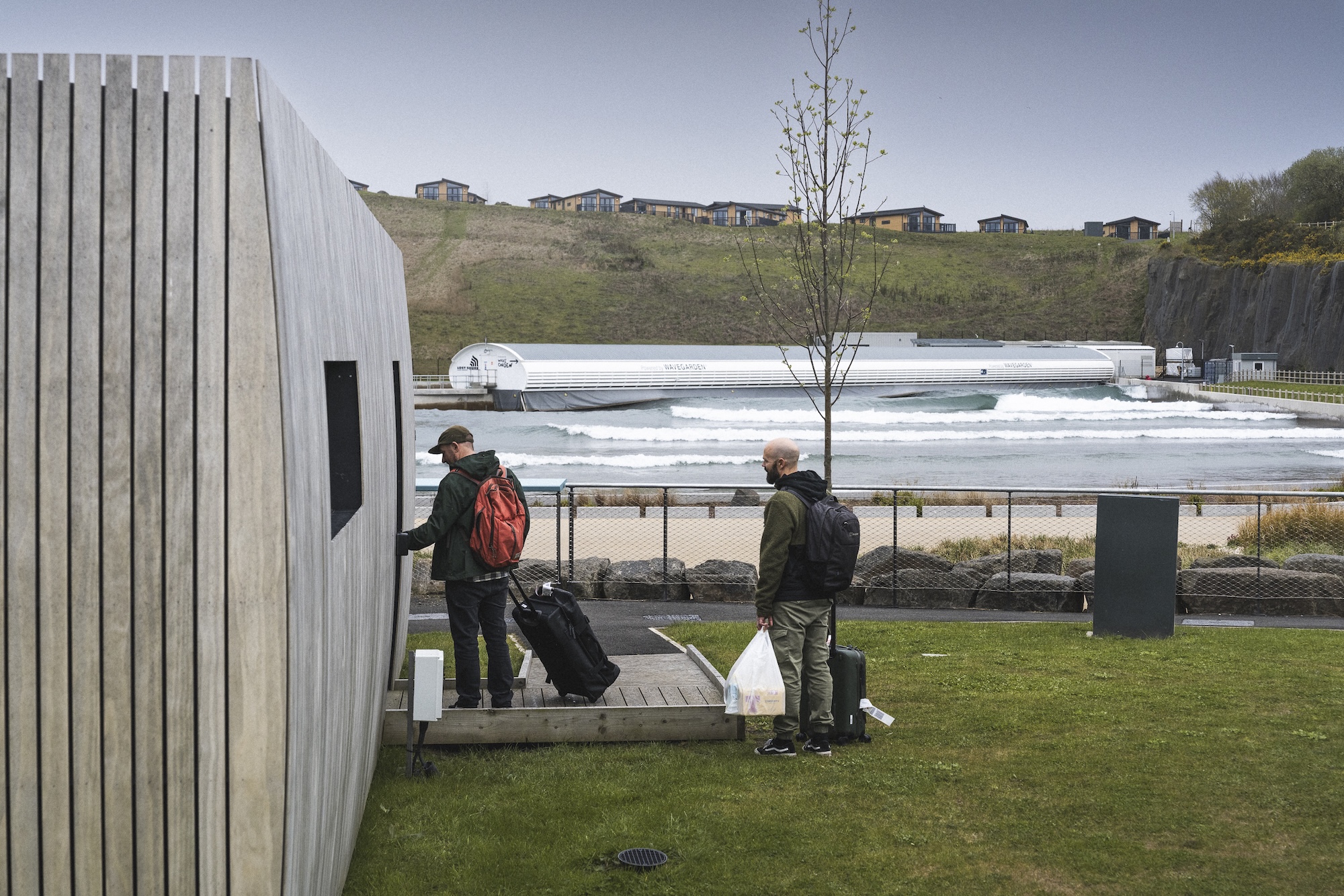
Lost Shore, Europe’s largest inland surf resort, powered by artificial waves, and the reason two Norwegian adults had voluntarily booked flights to Scotland to surf inside a quarry, was on the other side of the plane.
For the record, Morten is not a four-year-old boy. He is a grown man. A reasonable man. A surfer who, under normal circumstances, keeps a fairly cool head. But wave pools do something strange to people.
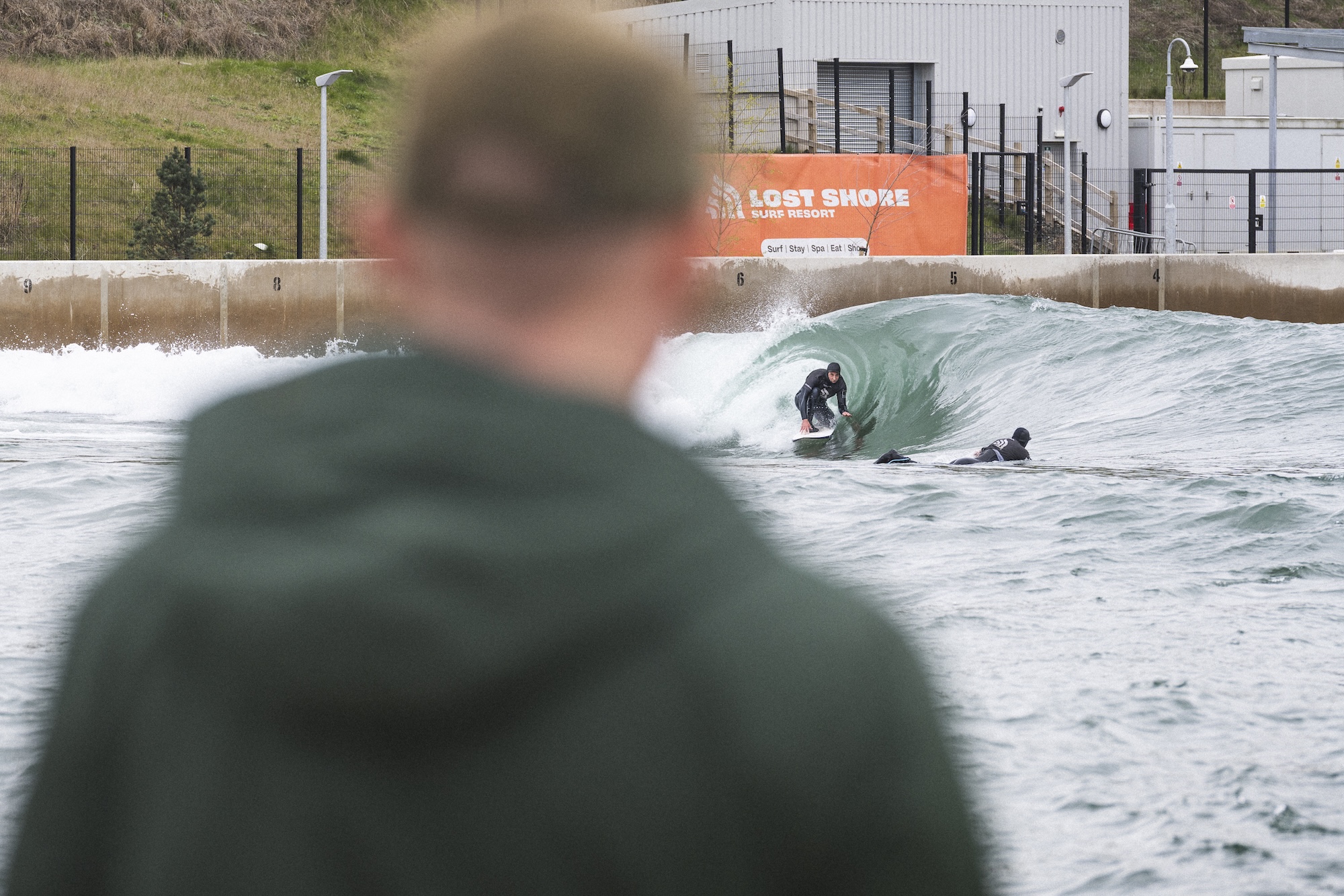
When I started surfing, roughly 1.3 million years ago, judging by my flexibility, I never imagined my first proper barrel would come from a wave I had booked online.
It didn’t.
For Morten, however, that is exactly what happened. First, we just had to paddle through a trough of facts, feelings and questionable decisions.
Surf trip paranoia
Usually, a surf trip begins with paranoia. You check wind. Tide. Swell period. Bathymetry. Storm tracks. Local cams. Buoys. You try to understand what the ocean might do, while knowing perfectly well that the ocean does not care about your annual leave.
Lost Shore removes most of that. There is no “maybe it’ll turn on later.” There is no “the wind was good yesterday.” No “you should have been here this morning.” Instead, there is a wave menu that will make you drool.
Tubes. Turns. Turns to Tubes. Maneuvers. High Performance. Waves that sound like they were named by someone who knows exactly how weak your impulse control is.
And that is where the danger starts. Because the descriptions sound so inviting. The waves look just about perfect. And somewhere inside your surf-addled brain, a tiny idiot whispers:
“You’ve had enough decent sessions over the years. You deserve the best now.”
That tiny idiot should never be allowed near booking systems.
Excellent advice, immediately ignored
At reception, we met Andy Hadden, the founder of Lost Shore. He has the kind of firm handshake and calm Scottish authority that makes you briefly consider becoming a better person.
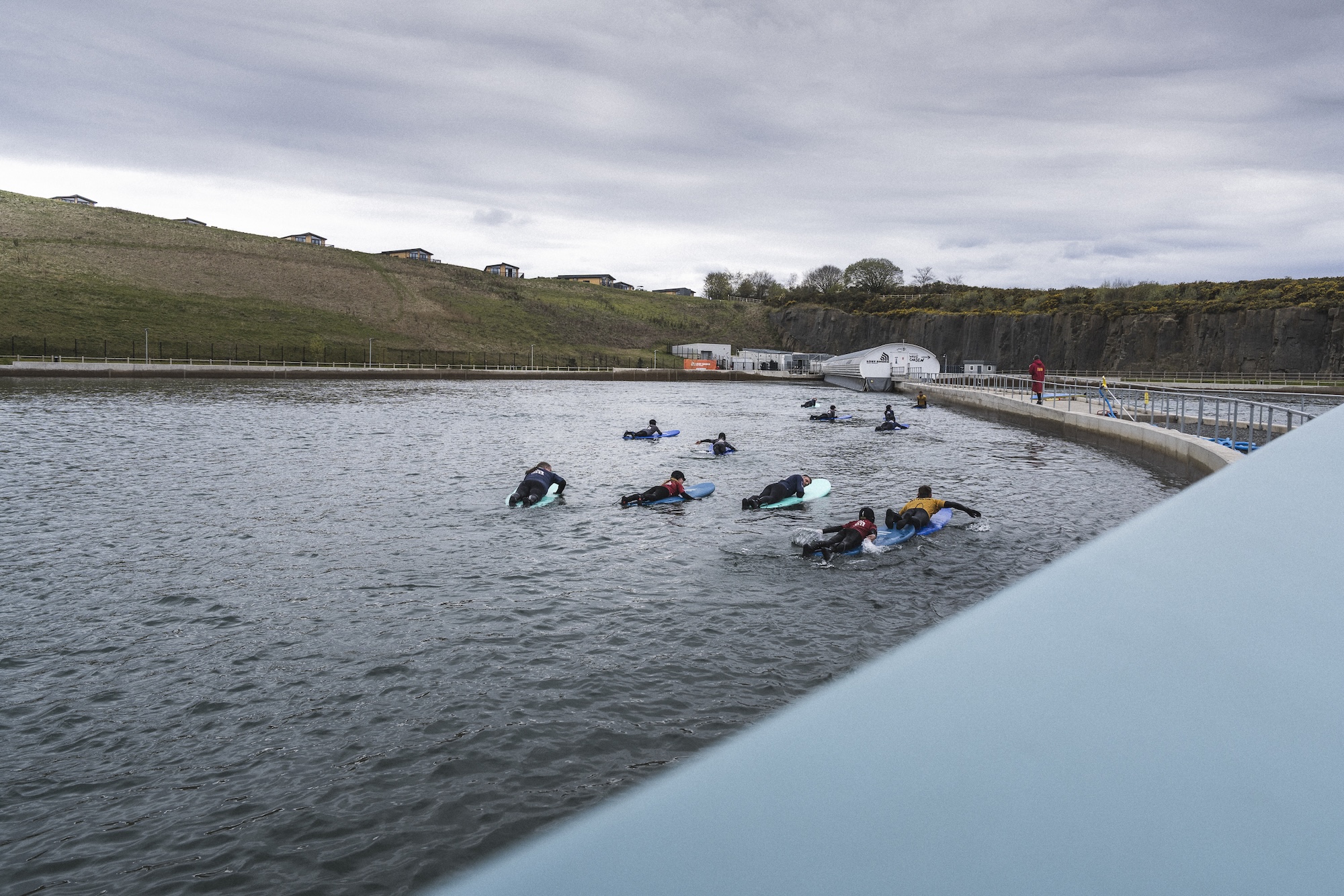
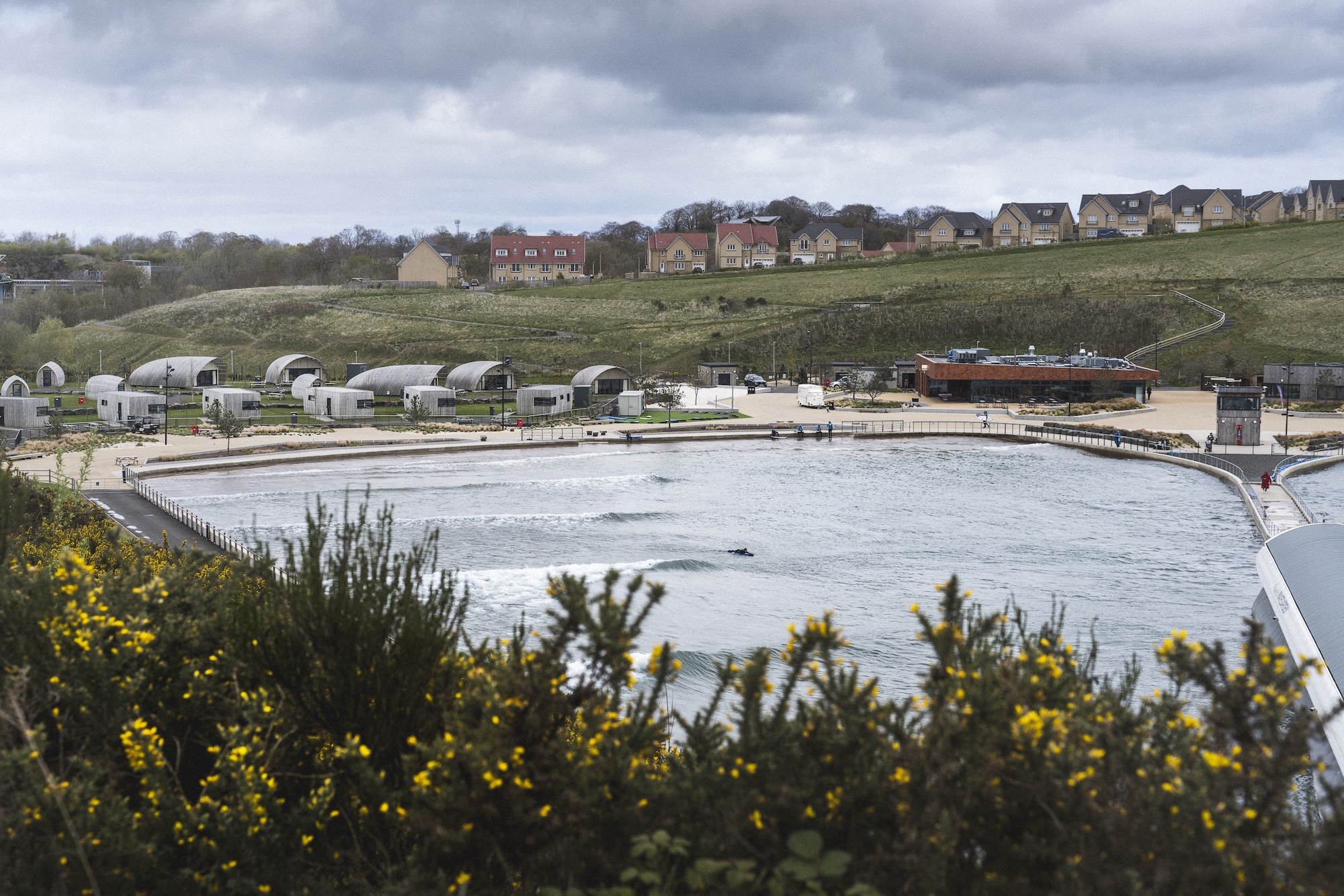
Andy, with great help from his crew, took a disused quarry outside Edinburgh and turned it into a surf resort. A real one. Not a novelty pool with soft corners and inflatable optimism, but a fully functioning inland surf resort with world class waves and the possibility of having the time of your life.
He also gave us the advice every first-time wave pool surfer should tattoo on the inside of their eyelids.
“Go one level lower than you think,” he said. “Almost everyone should. Get a feel for the take-off zones. Build confidence. Understand the rhythm. Then step up.”
It was perfect advice. Clean. Practical. Obviously correct. So naturally, we ignored it. Because we are surfers. And surfers are, at their core, people who can hear excellent advice and immediately paddle in the opposite direction.
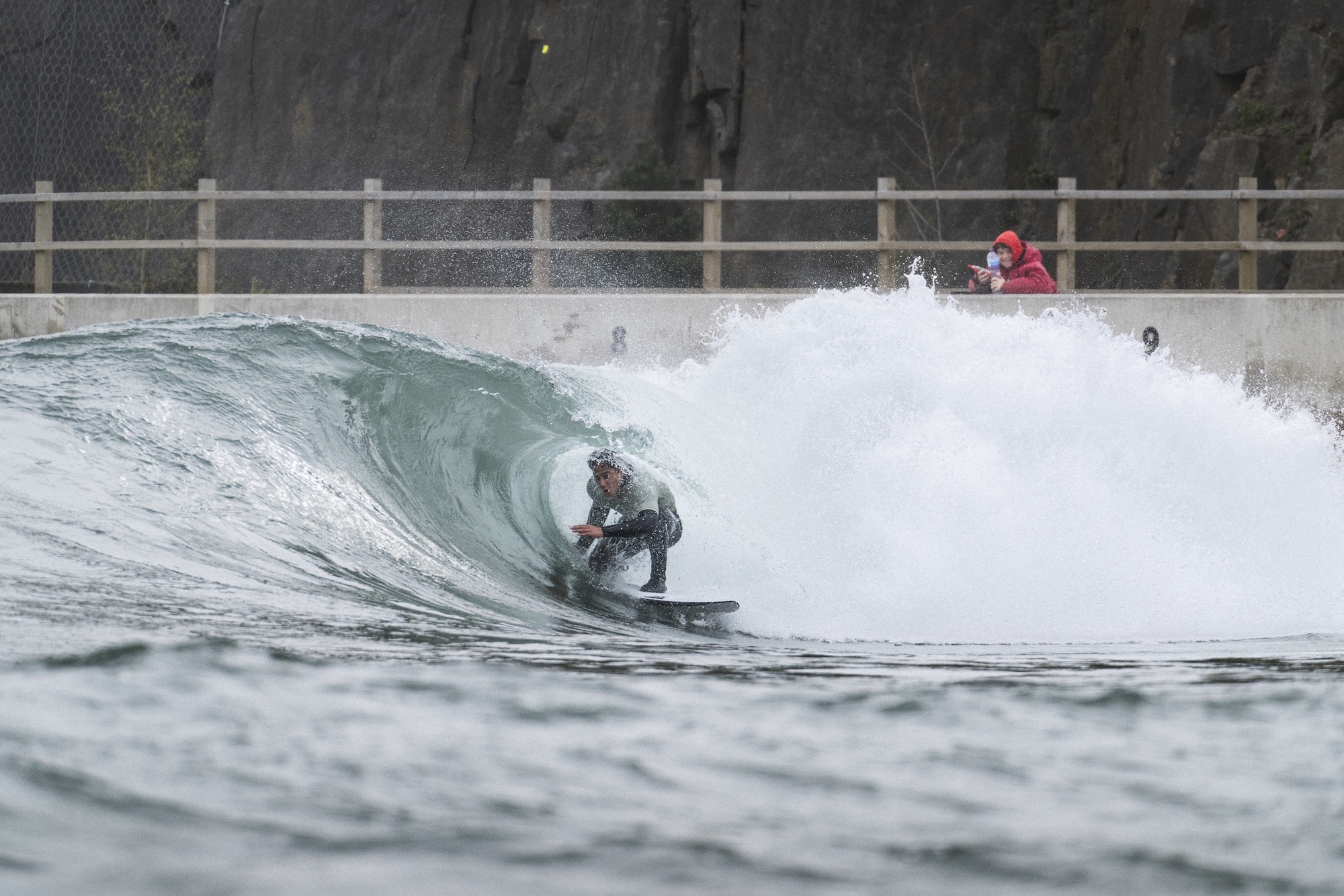
Wave greed galore
We were not completely stupid. Just stupid in a fairly standard, adult-male recreational way. We had planned a progression. Start with something familiar. Get comfortable. Then move towards the more demanding stuff. Maybe a few tubes in the evening, once the body and brain had agreed on basic operating principles.
Then we looked at the menu. And suddenly we were making decisions based not on ability, but on fantasy.
This is one of surfing’s great traps: confusing the surfer you are with the surfer you have occasionally imagined yourself becoming after three coffees and a good forecast.
Lost Shore exposes this with surgical precision. It gives you the wave, then it asks, very directly, what exactly you plan to do with it.
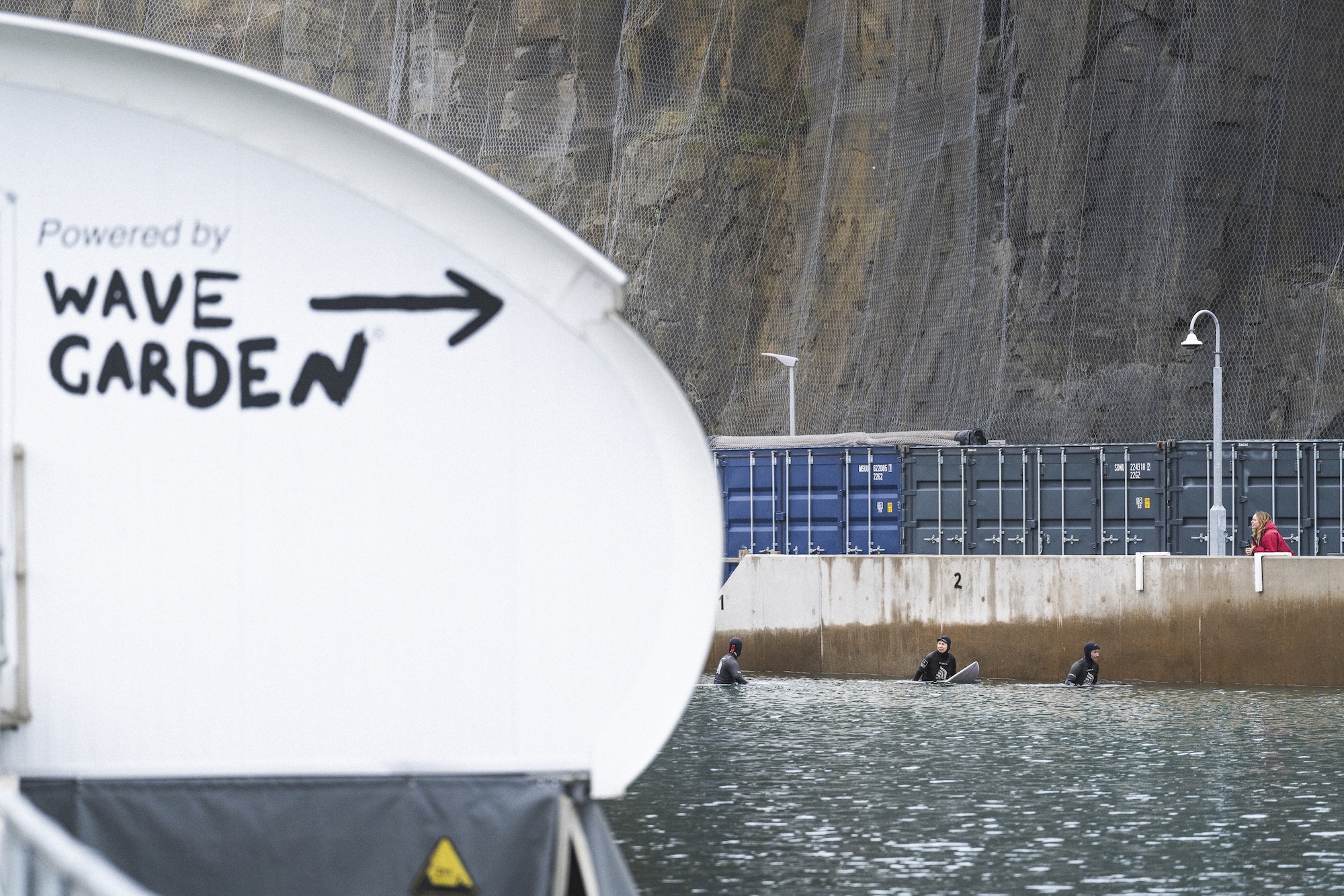
The awakening of a wave
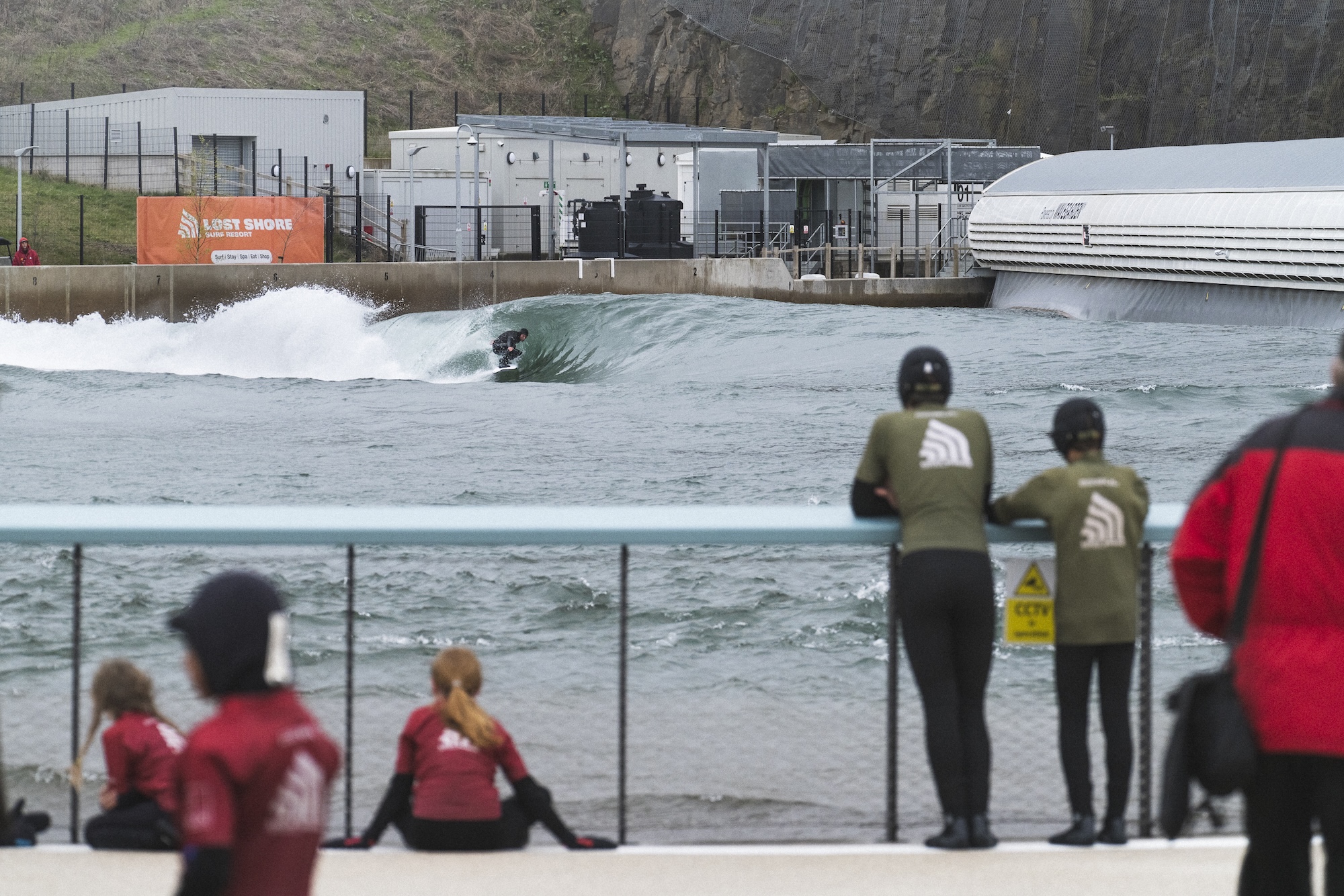
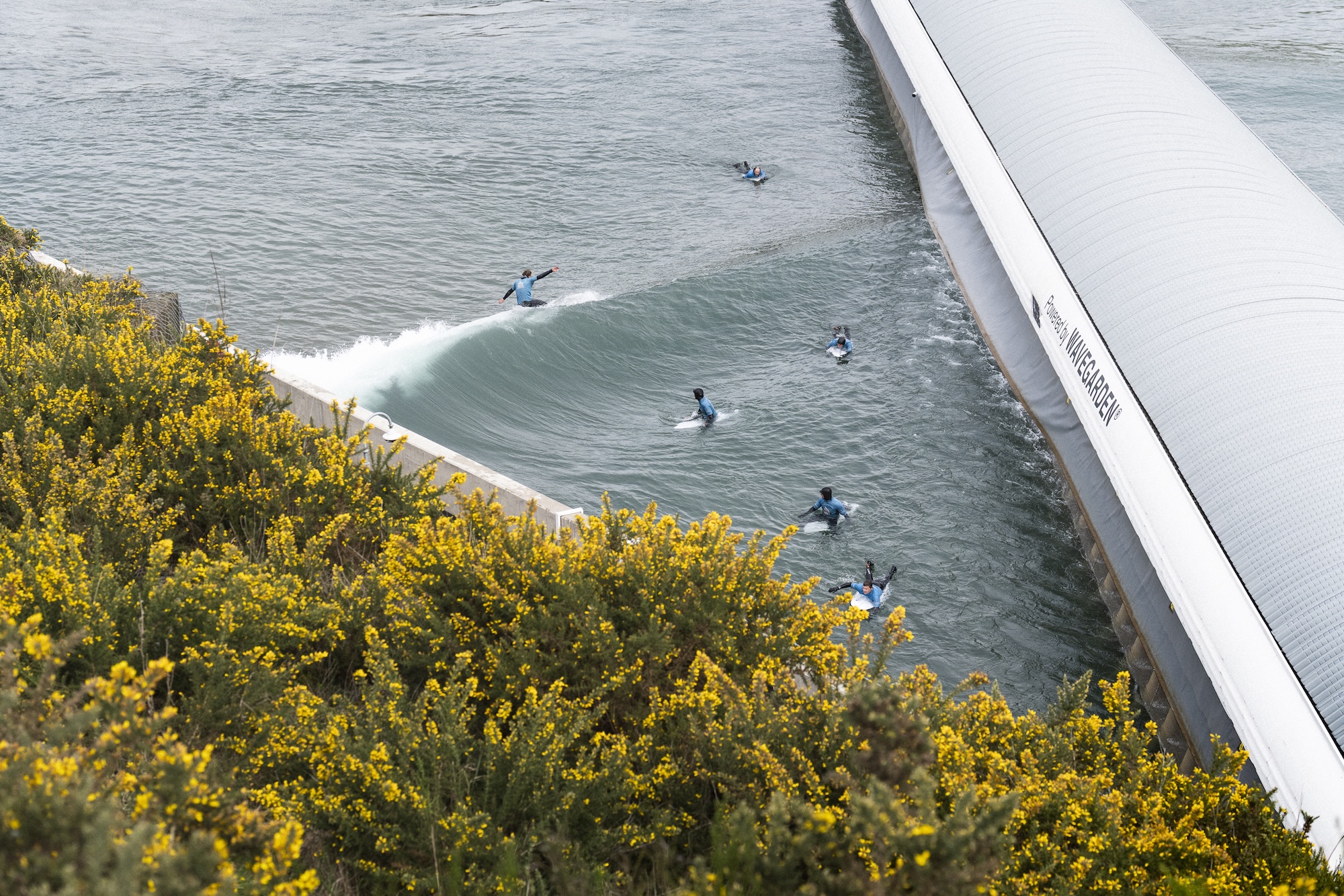
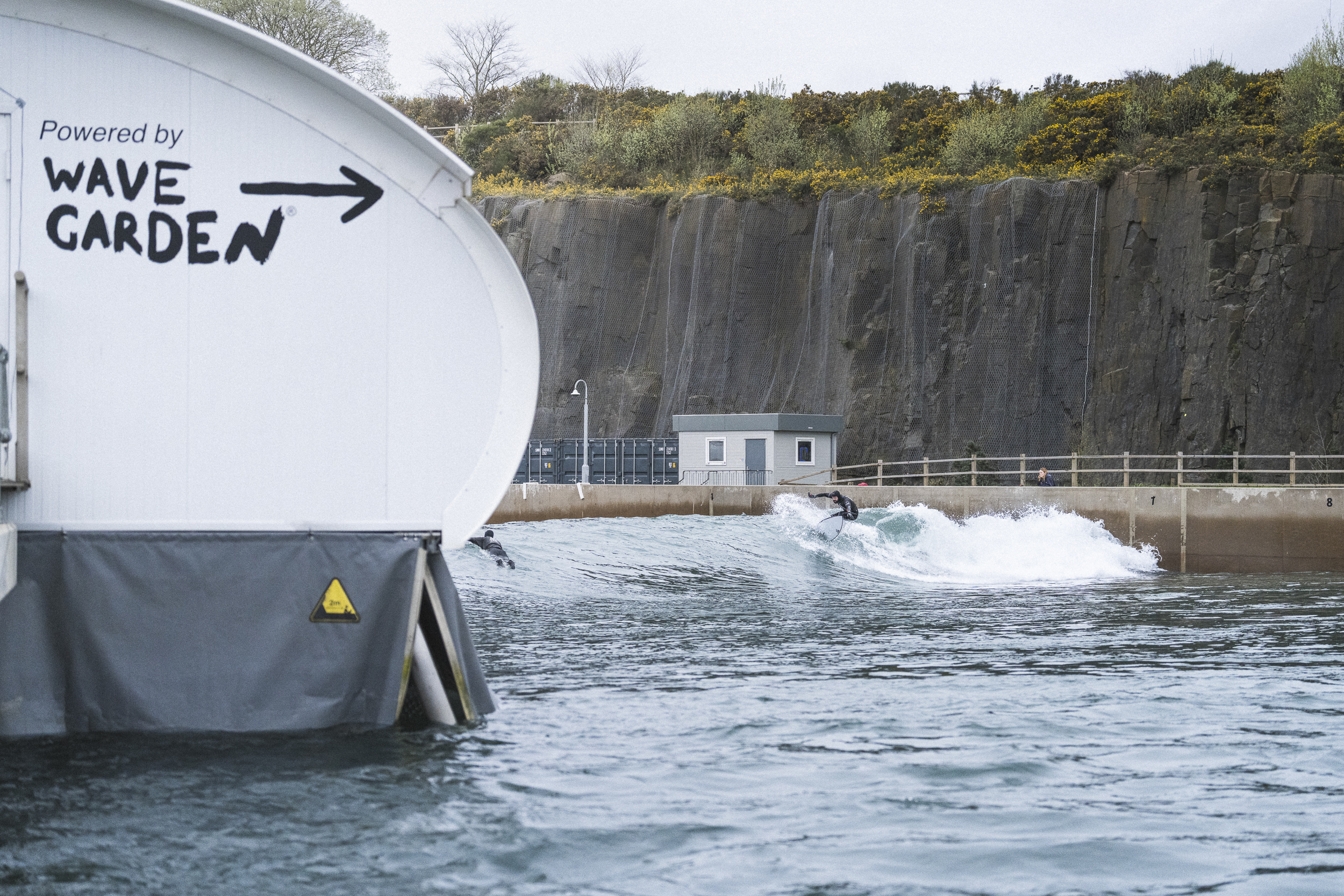
A smooth lump rises in the middle of the lagoon, as if something large has exhaled beneath the surface. Then the water gathers. Lifts. Turns itself into three running walls across the artificial reef. It is strange and beautiful and slightly unnerving. A wave with no storm behind it.
No horizon. No waiting. No mythology. Just mechanics, electricity and human engineering creating something your nervous system still insists on treating like nature. And this is important: a perfect wave does not make surfing easy. People see mechanical consistency and assume it equals simplicity. It does not.
Lost Shore is predictable, yes. But in a way that makes your mistakes impossible to blame on anything else. In nature, or “wild surfing” as one of the Surf Hosts at Lost Shore called it, you can blame chop, tide, crowd, backwash, the board, the sun angle, spiritual interference or that one guy who looked at you weird in the parking lot.
In a wave pool, the wave does the same thing again. That is confronting and for me it became almost unpredictably predictable, if such a thing makes sense to say. I’ll say it anyway.
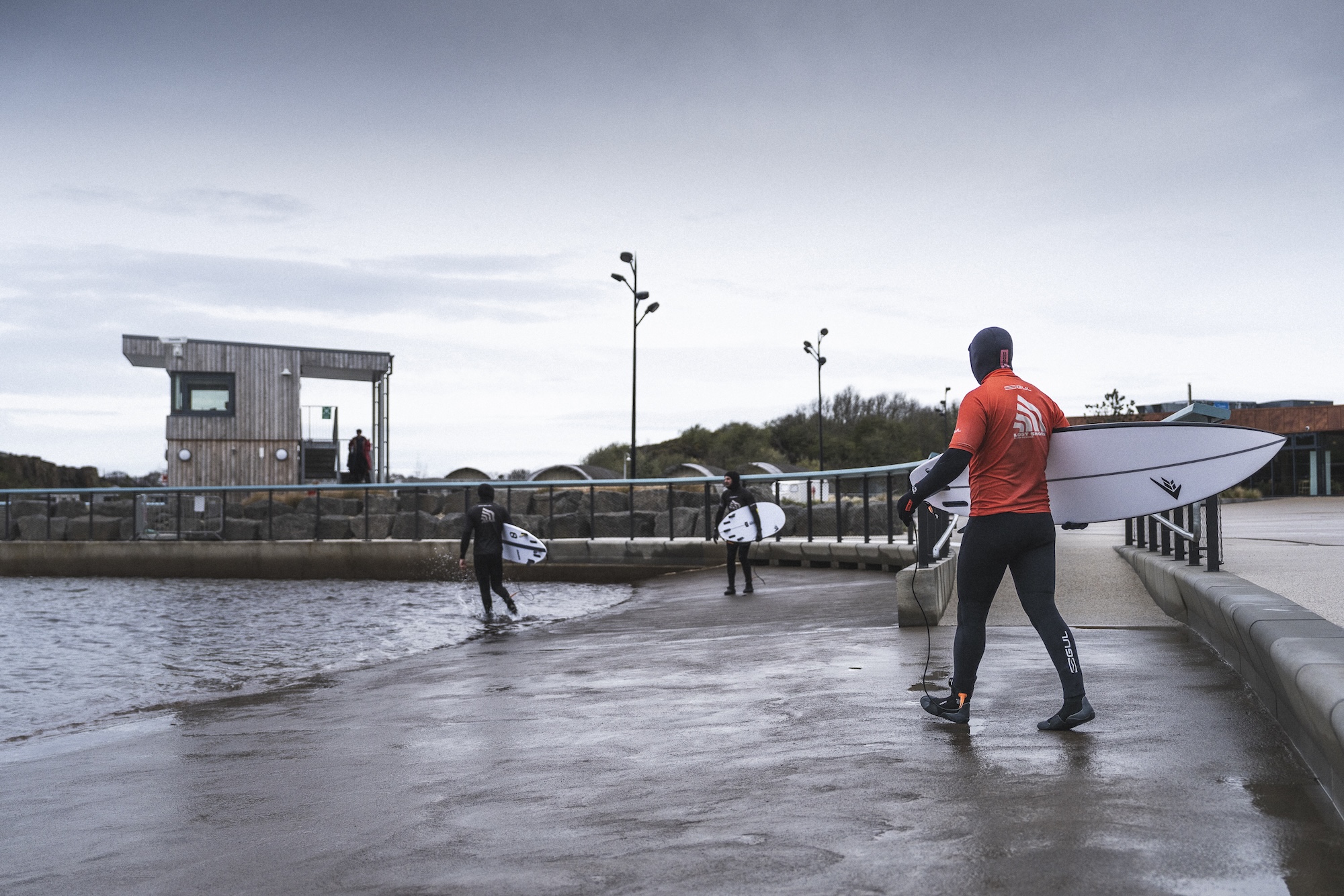
Point taken
The first session had five people in the water, one hour on the clock and enough nervous energy to power a small wave pool.
I paddled out too fast. Too eager. Paddled too hard. Angled when I should have gone straight. Tried to read the wave like it was alive and moody, when really it was doing exactly what it had been programmed to do.
The wave was not confused.
I was.
We burned energy quickly because we were surfing with ocean panic. The kind that says: this might be the last good wave for an hour. Go now. Paddle harder. Chase everything. Ruin yourself.
At Lost Shore, that logic does not apply. But even though you get briefed before the session and coached from shore as the waves evolve, my brain treated every wave like a pop quiz.
Eventually, we learned to let good waves go, sit in the corner and breathe. Relax. Turn panic into rhythm.
Once we calmed down, everything improved. Not because we suddenly became better surfers, but because we stopped behaving like starving dogs at a buffet.
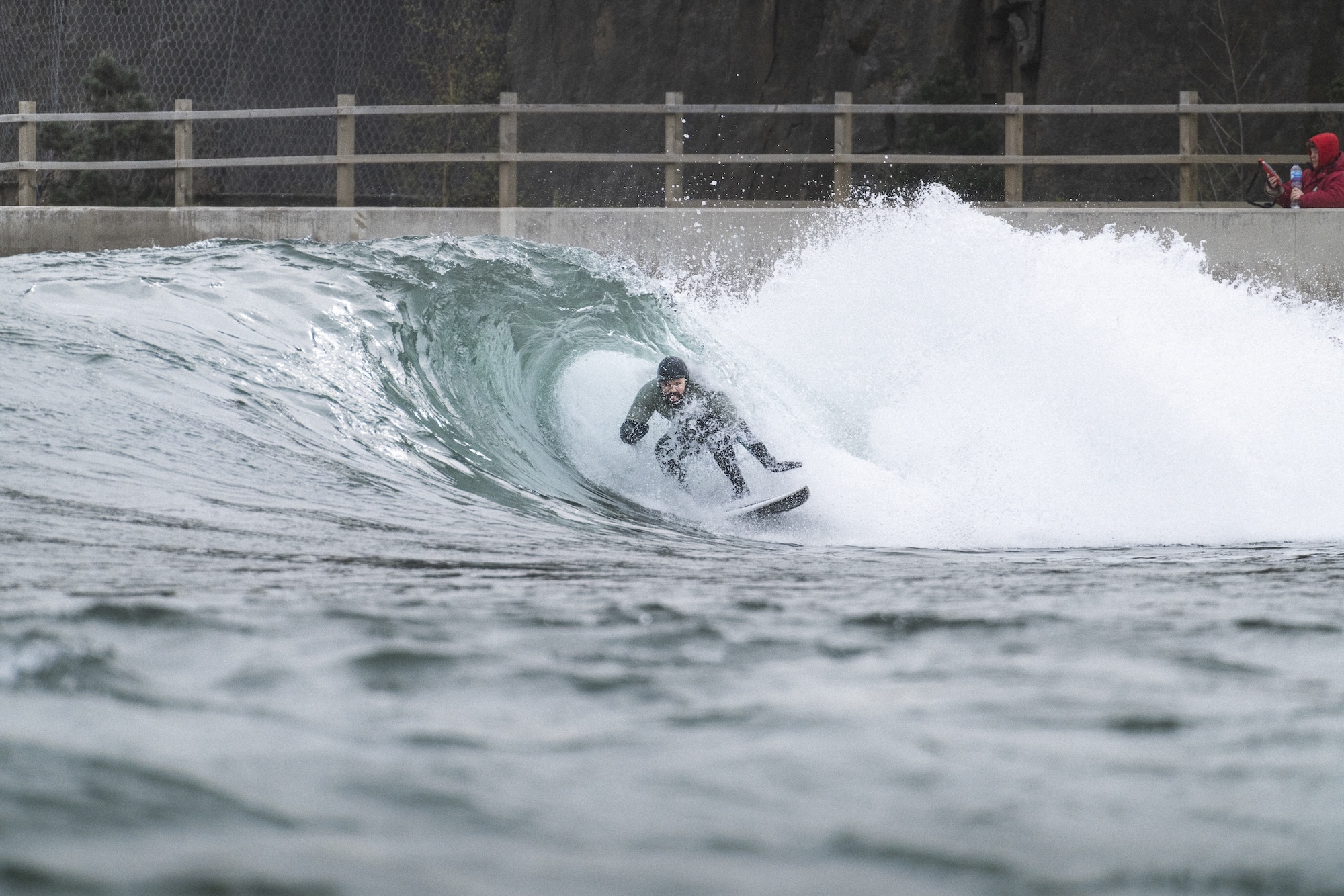
The least territorial surf spot on Earth?
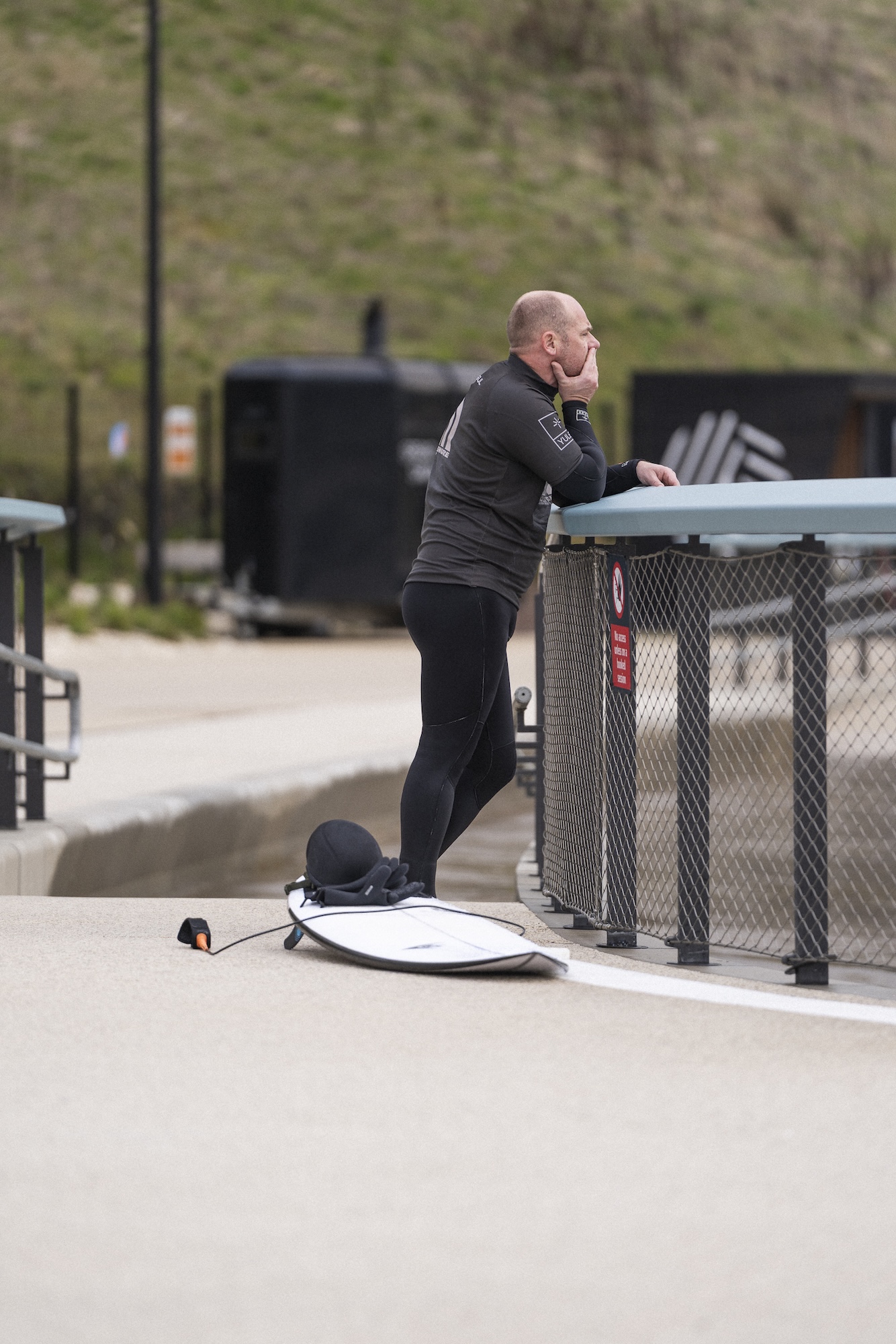
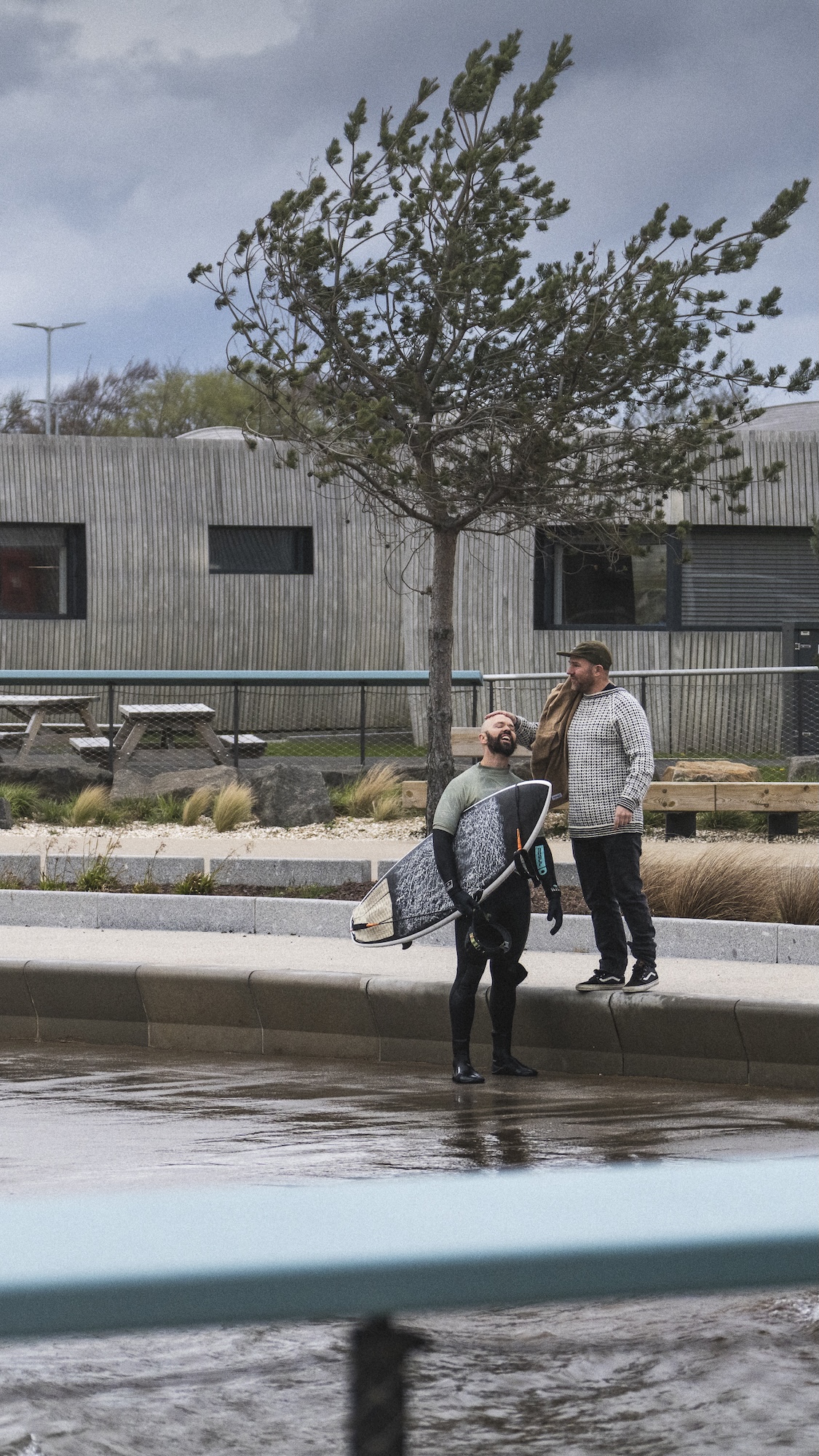
Another peculiar thing about Lost Shore was not the wave. It was the lack of tension in the lineup. Surfing is often described as a community, which is technically true in the same way airport security is a community. Yes, people are together, but much of the experience is governed by hierarchy, suspicion and localism. There are glances. Micro-aggressions. Parking lot politics.
Lost Shore is different. No one had discovered the spot first. No one had inherited the take-off zone. No one could claim ancestral rights to the best wave because their van had been parked there since dawn.
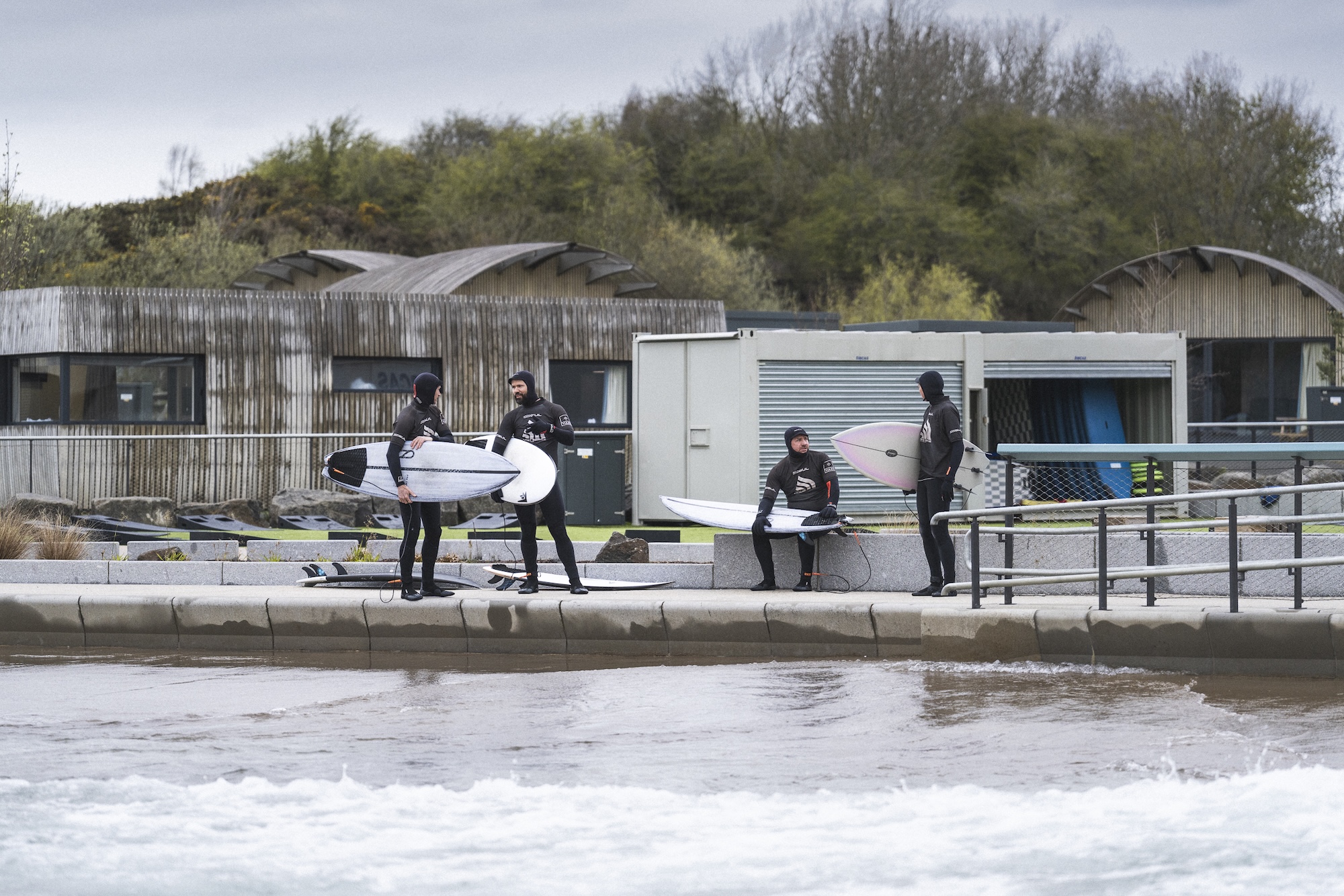
There were enough waves. There was a fixed number of surfers. And suddenly, everyone could relax into something dangerously close to friendliness. People introduced themselves before paddling out. Shared tips. Laughed at their own disasters. Let you go ahead when they were tired. Asked how your session went afterwards.
One guy had surfed 150 sessions since the place opened. Another had been completely humbled the day before and was generously warning others like a woman who had seen combat. Others were flying in from Ireland for an afternoon session.
It felt less like a lineup and more like a temporary support group for people who had willingly paid money to reveal their technical flaws in HD.
Surfing with the creator
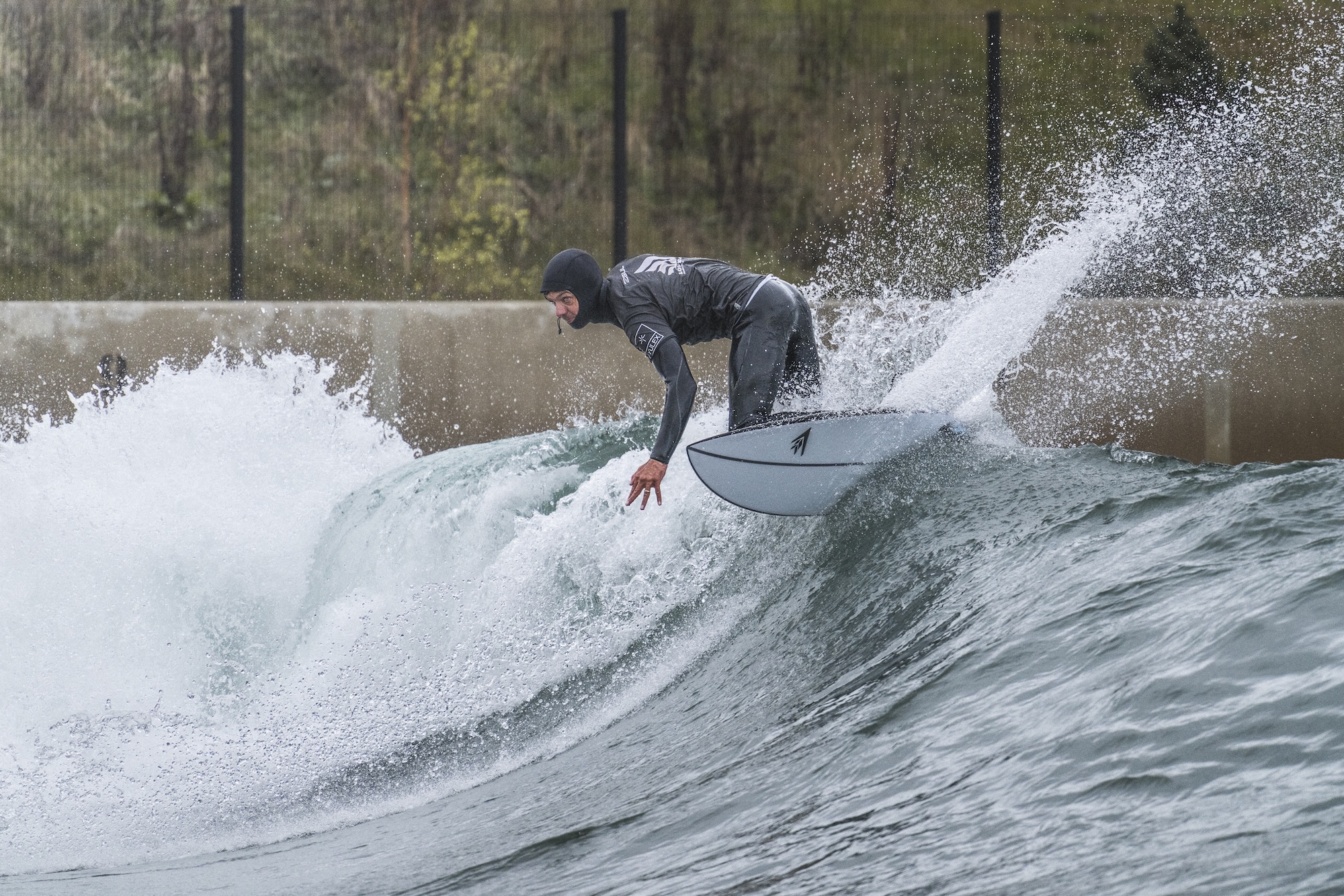
There are people who know a wave. Then there are people who actually designed the wave. No, I’m not talking about God, but Lee Wood, Lost Shore’s chief engineer and managing director. He is one of the people responsible for wave design and refining the wave settings. Which means paddling out with him feels less like surfing with a local and more like sharing a treadmill with the person who invented running.
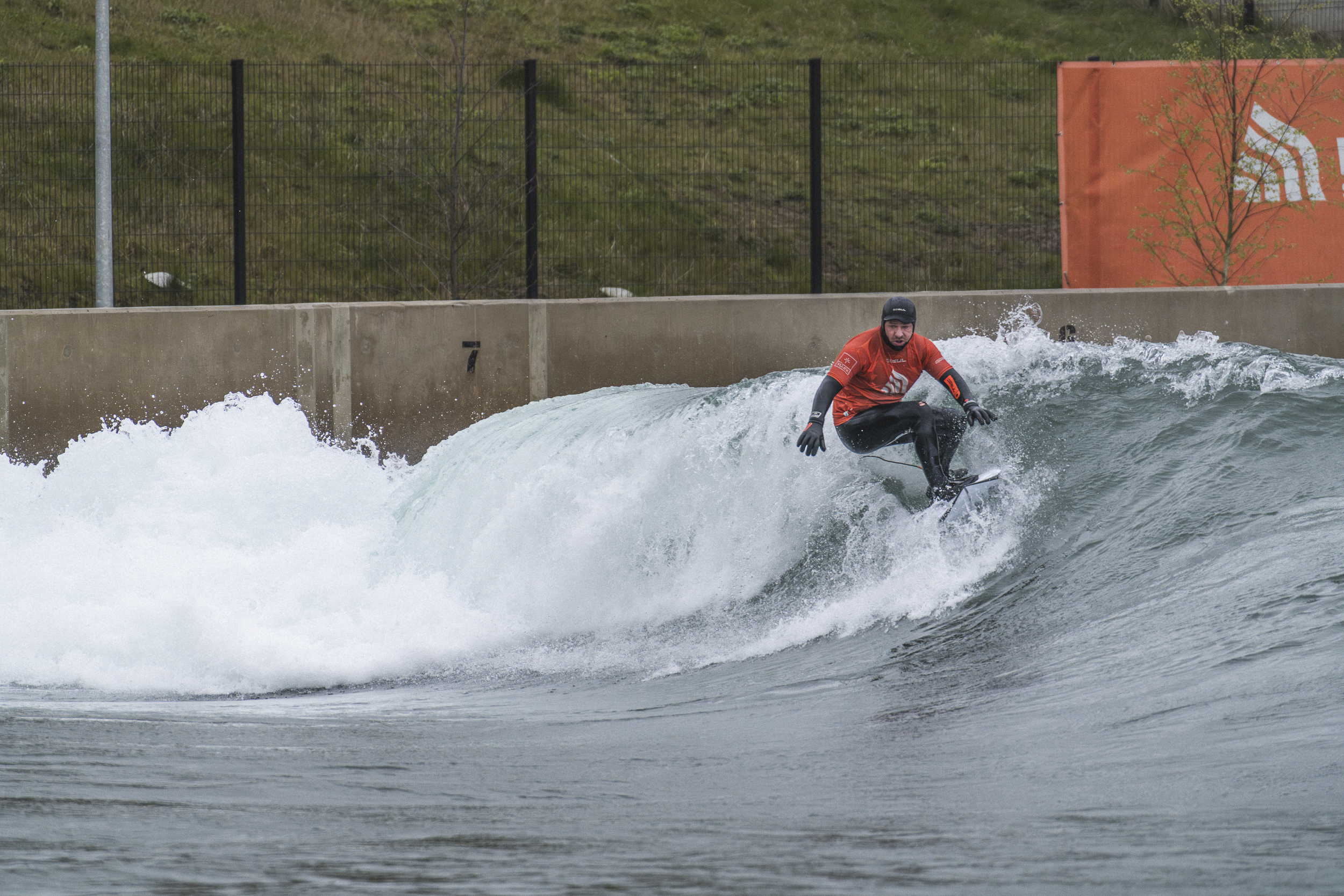
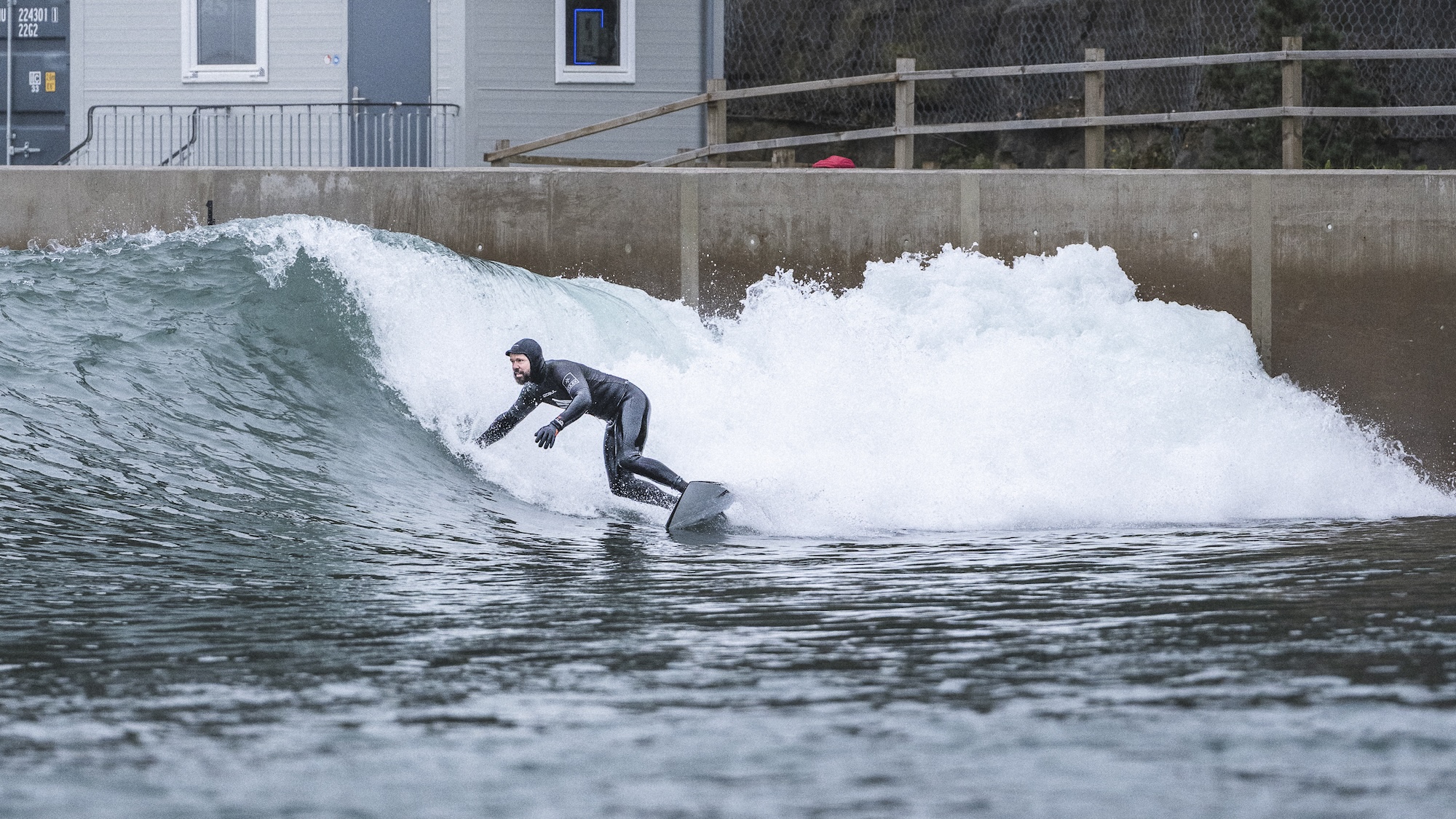
While we were there, Lee and Andy both jumped in for a session. They had made an adjustment to Maneuvers Plus, aiming to give the wave a more natural feel. It’s safe to say it worked. The wave had sections. Texture. A little speed section here, a turn pocket there, a small lump near the end that changed the timing just enough to keep you on your toes.
For me, the hardest part was not the wave.
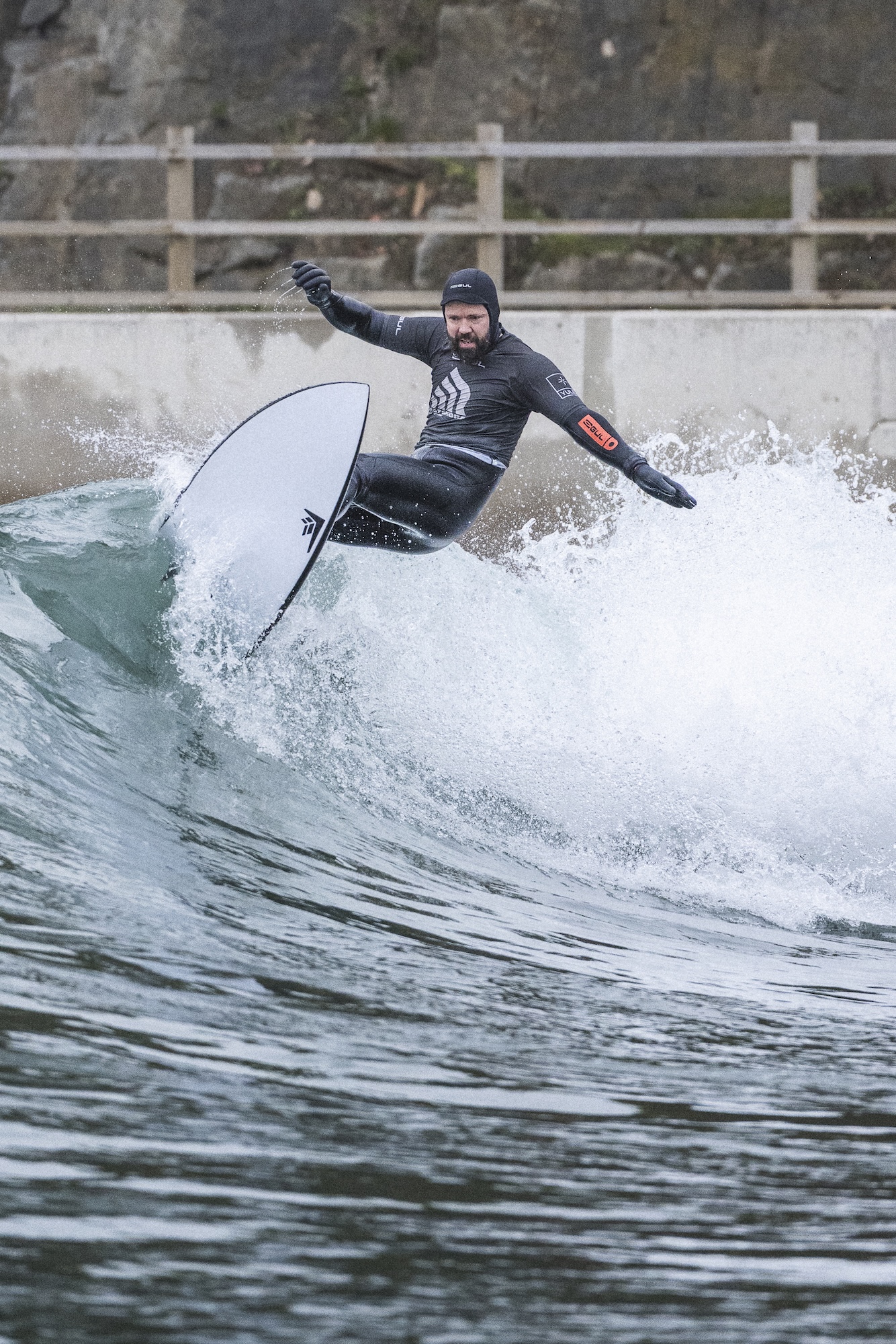
It was the take-off. Positioning. Looking down the line. Paddling straight. The embarrassingly basic things that vanish from your brain when everything looks too good and you desperately want to be the kind of surfer who rips it. Once up and moving, the wave was ridiculous. Clean face. Open wall. Enough time to make decisions.
How to get barrelled, apparently
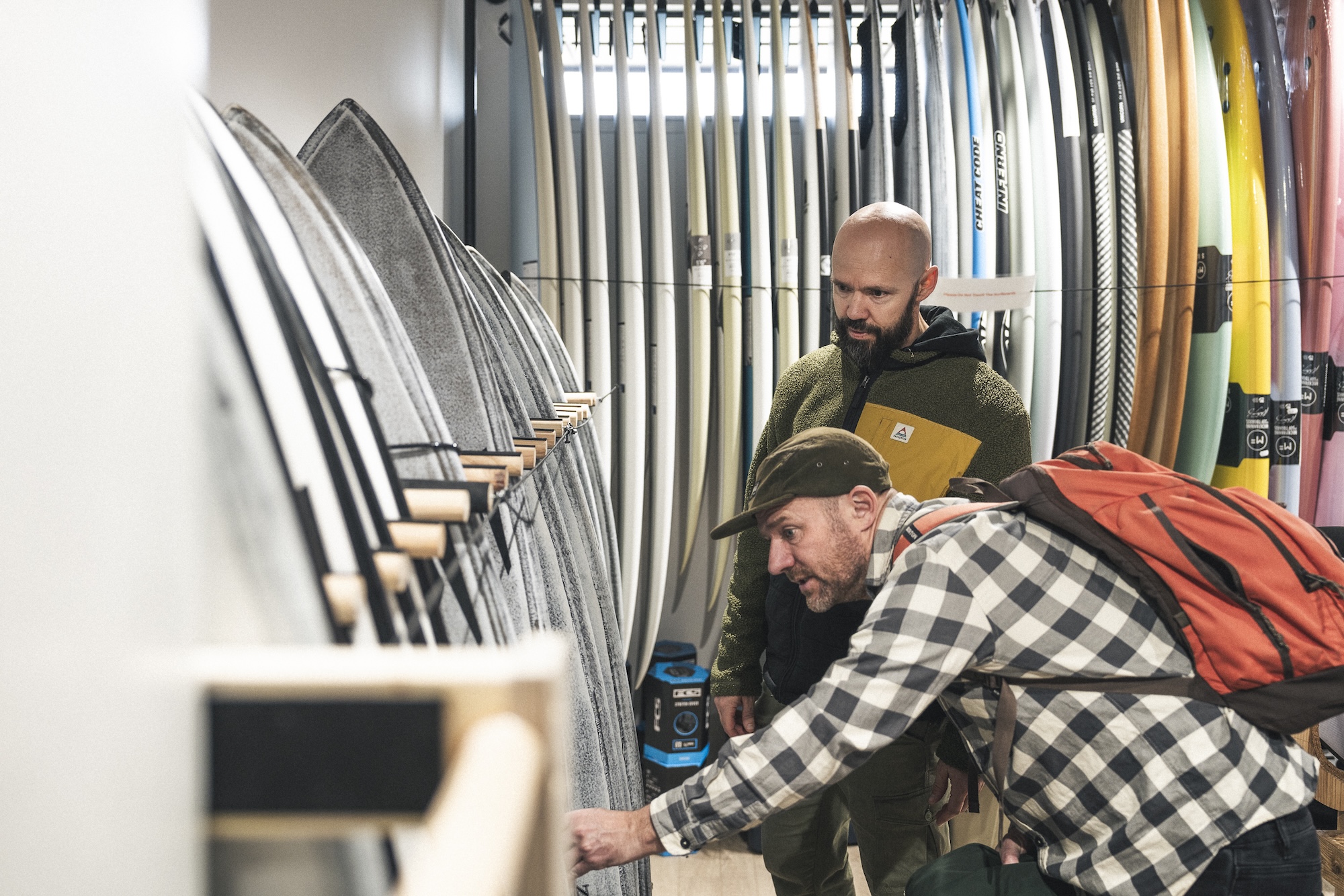
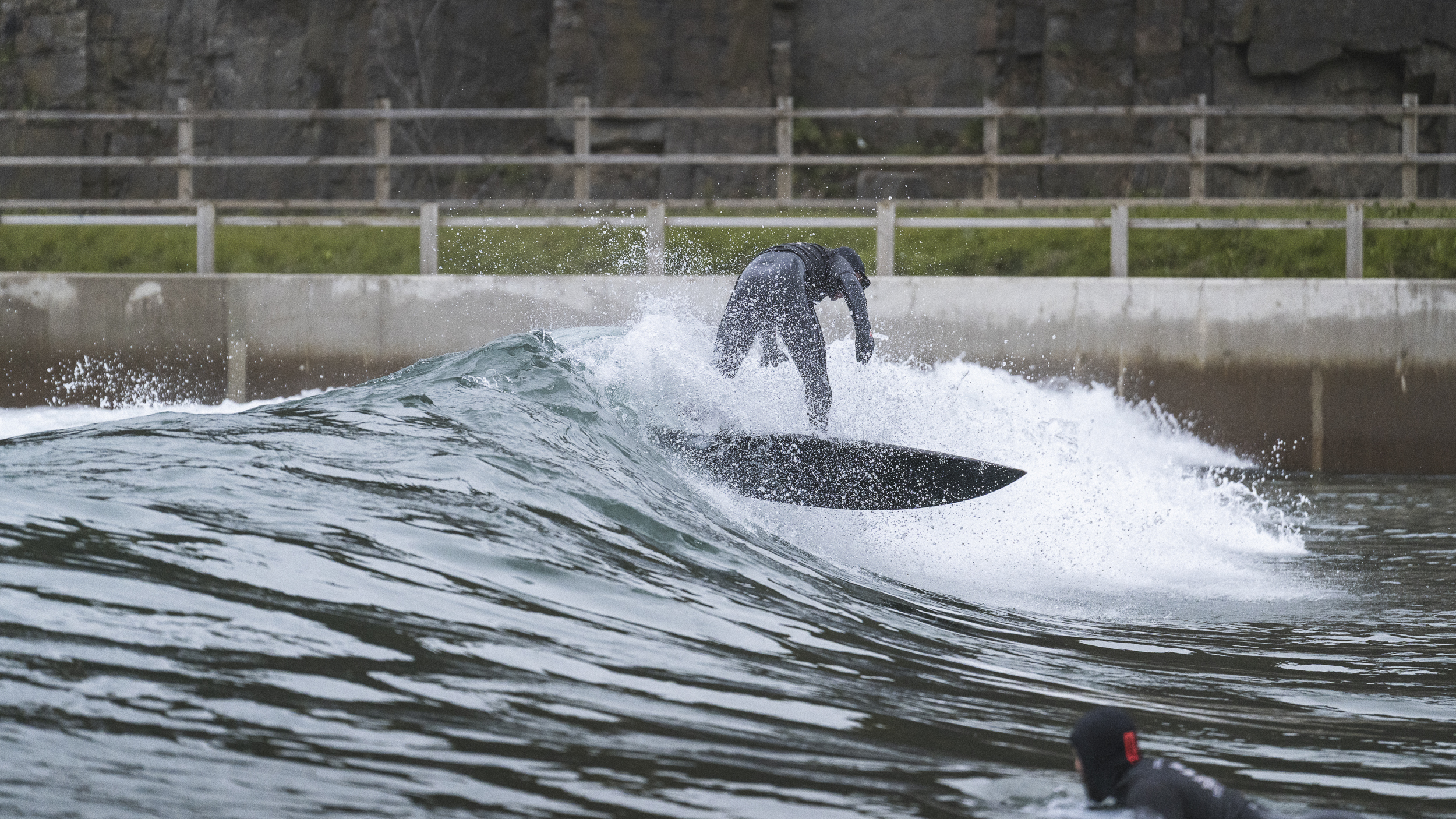
The best piece of advice of the trip came from Lee, sitting in the surf shop like a man casually handing out cheat codes. Morten wanted a barrel. Lee knew how to get it.
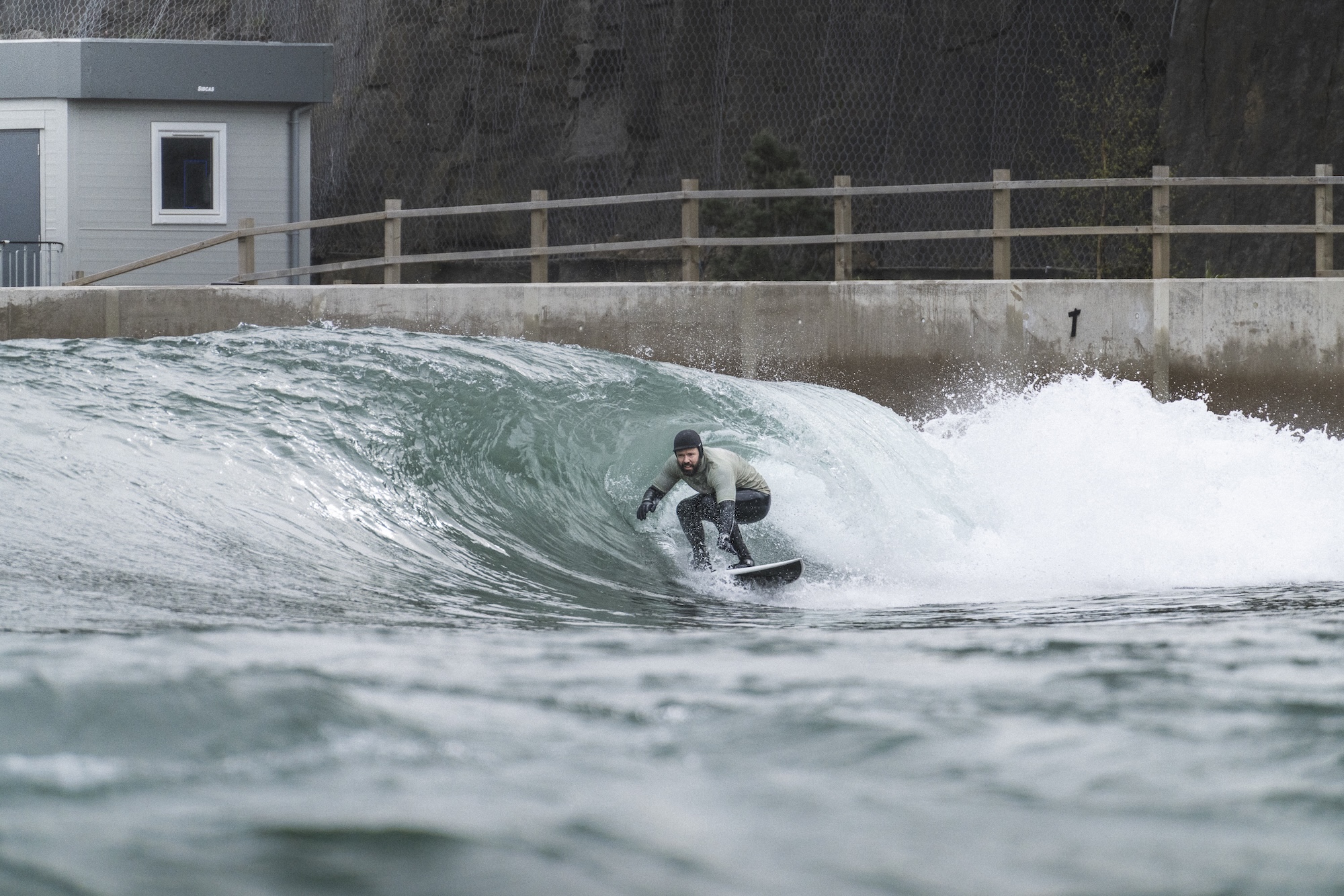
“Take the drop,” he said. “You have time to adjust, maybe do a couple of turns, but don’t chase it. The best thing is to set yourself calmly in position and wait. When the wall rises, don’t go up, even if you want to. Aim the nose slightly towards the lifeguard tower. Just stand there. Just hold. Then you’ve got it.”
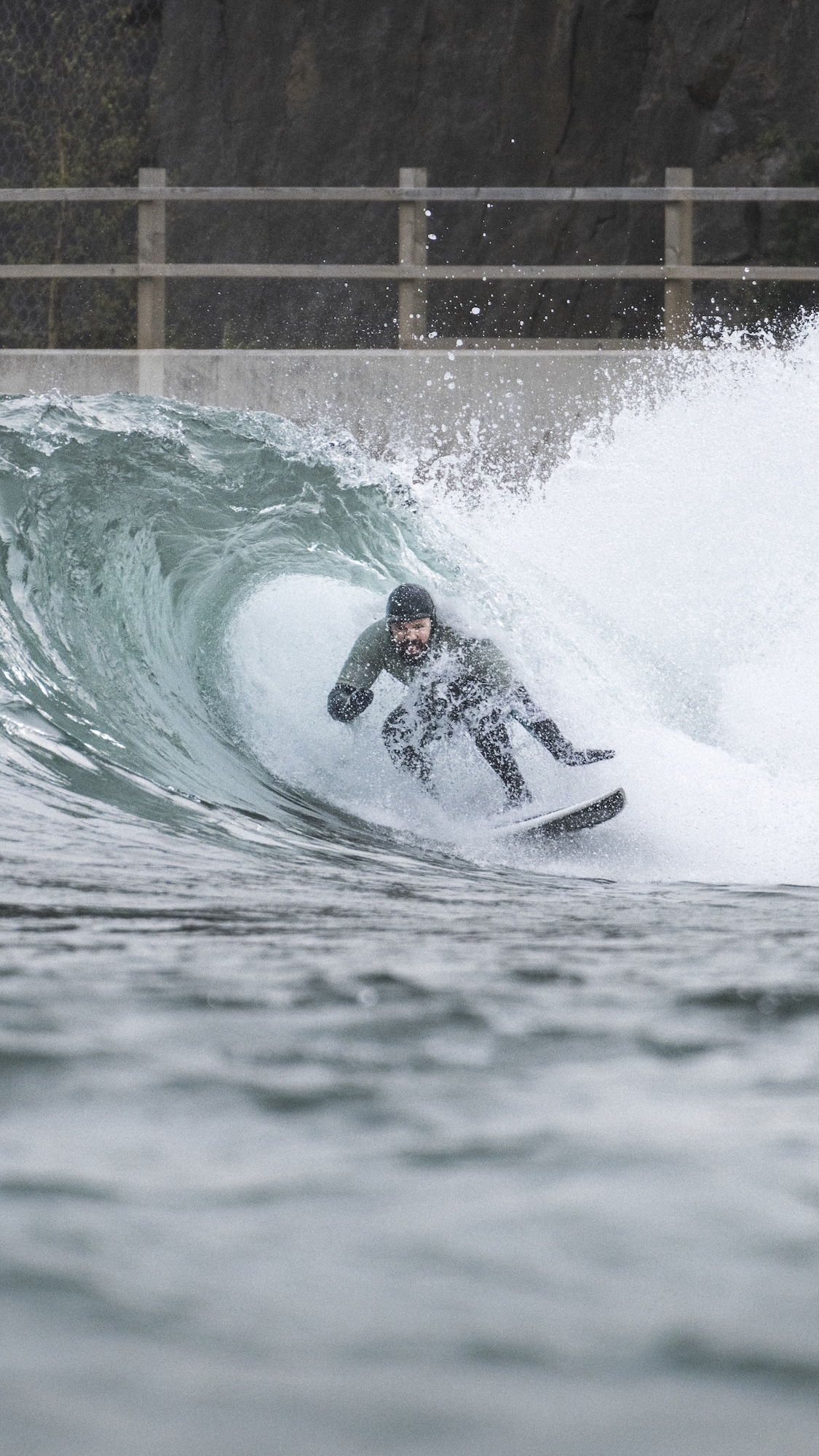
A few minutes later, Morten had it.
“I was so nervous I almost left the pool out after the first tuberide,” he said later.
Well, from the shore, he looked irritatingly composed. Like a man who had been born in the barrel section of a man-made wave pool.
I, meanwhile, fell back into old sins. Overthinking. Poor timing. Wrong positioning. Got eaten. Scrubbed. Repeated the process with minor variations. Eventually, I gave up.
This remains my great regret of the trip. Because it does come together eventually. You just have to stay with it. The wave comes again. Your body learns. The stress drops. The timing arrives.
Unless, of course, you get out and sulk while your friend keeps getting barrelled. Which is also an option. Just not a good one.
I tried hard to stay sulky, but the doom and gloom quickly dissolved into childlike, joyful screaming as Morten disappeared behind the curtain again. And again.
Lucky me to have a friend who understands my lifelong weakness for peek-a-boo.
167 waves later
After two days and four sessions, Flowstate, the system that films every wave, gave us the numbers. The wave count was ridiculous. 167 waves in total. Morten: 107. Me: 60.
This is both an excellent return and a minor character assassination. In Norway, 60 waves of that quality would take weeks. Months, depending on the season, your luck, and how forgiving you are with the word “quality.”
At Lost Shore, it happened in two days. That kind of quantity changes something. You get reps. Real reps. Not hopeful paddles. Not closeouts with a shoulder-shaped rumour at the end. Actual waves with actual sections and actual consequences for poor timing.
Lost Shore is not the ocean, and that is exactly the point.
For me, it will never replace the unpredictability of an ocean swell. The hunt. The weather. The excitement upon arrival. The accidental magic of being in exactly the right place for a short window of time on a random Thursday.
But it offers something else. Something much needed.
Predictability. Progression. Precision. A lineup without the medieval politics. Waves so good they will make you laugh. Waves so good they will make you furious. Waves you may never have experienced before in your life.
So, is it worth it?
Well, let’s put it like this: On the flight home, we were already planning our next trip.
One of us to get his first tube.
The other to get even more.
Craving more cold water surfing?
Great. Head over to our front page and get to know Norwegian surfing a bit better. If you want to check out where to surf in Norway, and learn more about our surf spots, click here. PS: Remember to follow SurfNorge on instagram here, the splendid photographer Kjetil Simonsen aka here.